01 / The Concept
What Is KIVAM, Exactly?
Before building the brand, we need to be honest about the concept. The specialty beverage retail landscape has several distinct archetypes — each with different economics, licensing requirements, and operational complexity. KIVAM must choose its identity deliberately, not accidentally.
Specialty Retail Archetypes
Six established models — evaluated for fit with KIVAM's constraints: 120 m², Güniz Sokak, urban professional audience.
Roastery Flagship
Not applicablee.g. Starbucks Reserve · Tim Wendelboe · Workshop Coffee
Roasting on-site is the hero. Customers watch green beans become espresso in the same room. Destination travel, not neighbourhood habit.
KIVAM: Requires industrial ventilation, roasting machinery, 4-5× more capital. Not viable at 120 m².
Third-Wave Café
Partial overlape.g. Petra · Slow Bakery · most "specialty" cafés
Coffee bar first, retail shelf as an afterthought. Milk drinks dominate revenue. Staff are baristas, not product specialists.
KIVAM: Margins depend on F&B throughput. Requires kitchen, waste management, full café licence. Complex from day one.
Brew Bar Retailer
Closest fite.g. Onyx Coffee Lab · Has Bean · early Intelligentsia
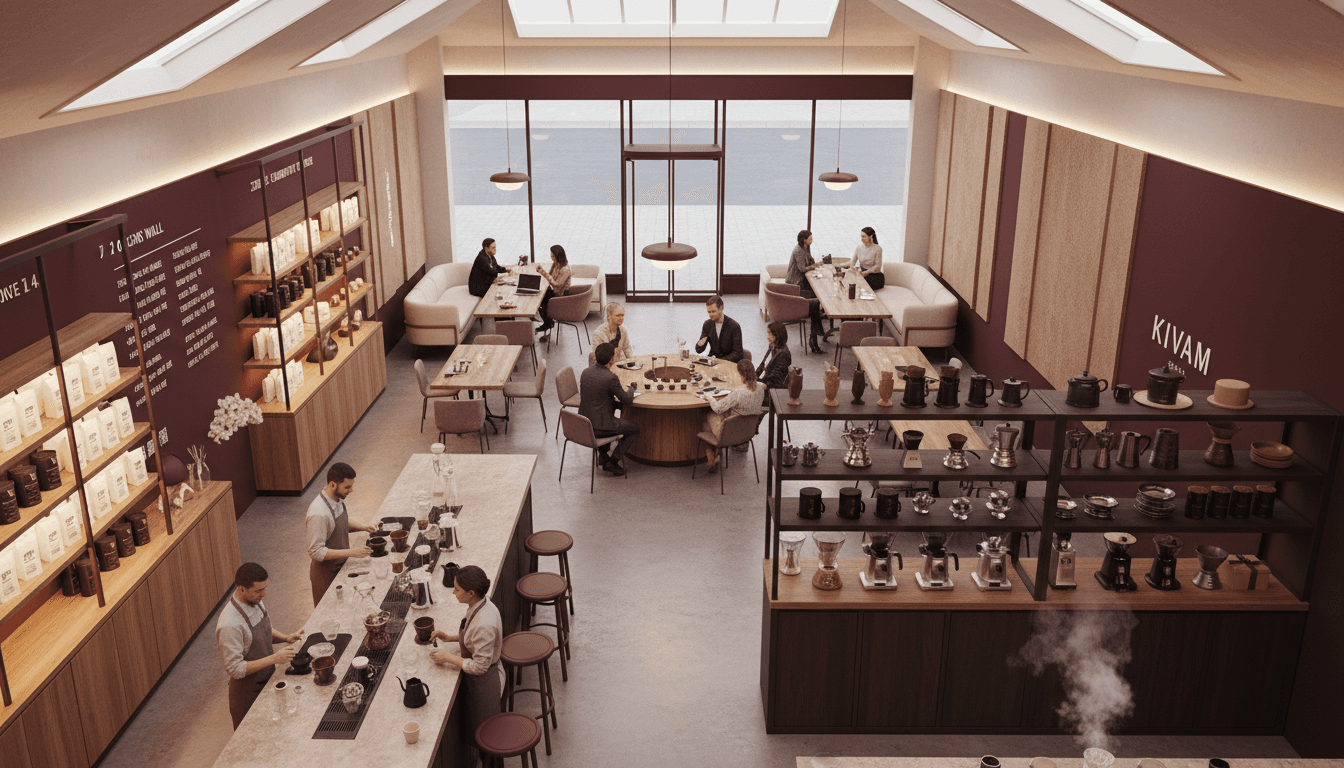
Small brew bar (4–8 seats) integrated into a retail floor. Tastings, flights, filter coffee — no full menu. Staff are product educators, not waiters.
KIVAM: Closest model to KIVAM. Tasting Station + Discovery Bar already function as a brew bar. Smooth regulatory path.
Pure Specialty Retailer
Partial overlape.g. Counter Culture · Pact · The Barn (Berlin)
No prepared beverages at all. Sells beans, equipment, subscriptions. Revenue depends entirely on basket size and return frequency.
KIVAM: Lower entry cost but higher conversion risk. No "coffee smell" hook. Subscriptions take 6–12 months to compound.
Tea Salon
Not applicablee.g. Mariage Frères · TWG · Fortnum & Mason
Highly ceremonial, tablecloth service, trained tea sommeliers. Ultra-premium price points. Deeply aspirational but operationally heavy.
KIVAM: Single-category focus and service model misalign with KIVAM's multi-category, self-directed discovery approach.
Lifestyle Concept Store
Partial overlape.g. Apolis · Saturdays NYC · Kinto flagship
Product is the vehicle, brand is the destination. High margin on own-brand goods, low SKU count, strong visual identity. Events and collabs drive footfall.
KIVAM: KIVAM can borrow the editorial curation and community programming from this model — but product depth must not be sacrificed for aesthetics.
The Honest Declaration
KIVAM is
A specialty retailer — product is the primary revenue driver
A brew bar — small tasting counter with rotating flights, no full menu
An education space — cuppings, tastings, origin storytelling
A community anchor — programming, events, third-place seating
A subscription launchpad — physical store as conversion funnel
KIVAM is not
A café — no milk drinks, no food menu, no table service model
A roastery — no on-site roasting infrastructure or industrial permits
A mass-market retailer — curation over volume, always
A tea salon — too ceremonial, single-category; we are multi-origin & multi-format
A DTC-first brand — digital channels serve physical; not the reverse
The Revenue Reality
A pure retailer (no bar) is the simplest operation — but it depends entirely on basket size and return frequency. A brew bar component (the tasting station and discovery bar) smooths daily revenue, creates habitual visits, and converts browsers into buyers. The risk of being too café is equally real: café economics require high throughput, full licensing, and kitchen infrastructure.
Our answer: ~70% retail revenue, ~30% tasting/brew bar. No table service. No food menu. The Community Corner is a programming and dwell space — not a restaurant. This keeps licensing light, operating costs controlled, and staff focus entirely on product expertise.
Logo Variations




Color Palette
Brand Values
Origin Transparency
Every product traced from farm to shelf. We name the farm, the farmer, and the harvest season.
Artisan Craft
Curated by specialists. From pour-over ratios to first-flush timings — precision matters.
Community
More than a store. A gathering place for urban Ankara's curious and passionate.
Sustainability
Compostable packaging, direct-trade sourcing, zero-waste brewing demos.